THE TABLETS
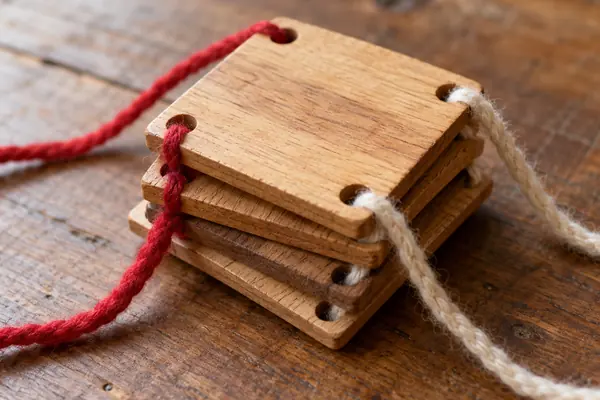
Small, square, four holes
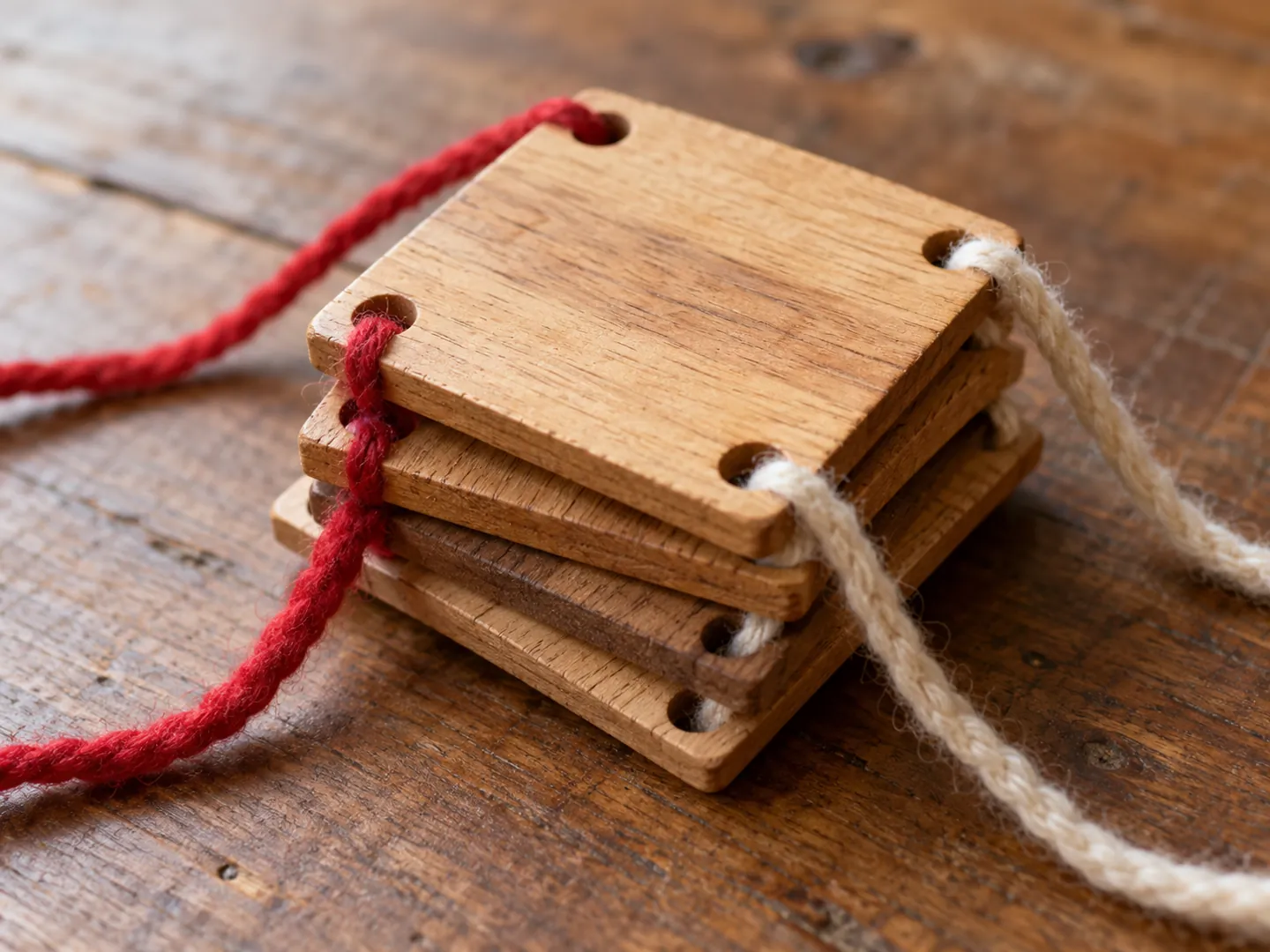
Tablets are small, thin and typically square, with a hole in each corner. Triangular, hexagonal and octagonal ones have also been found.
How it works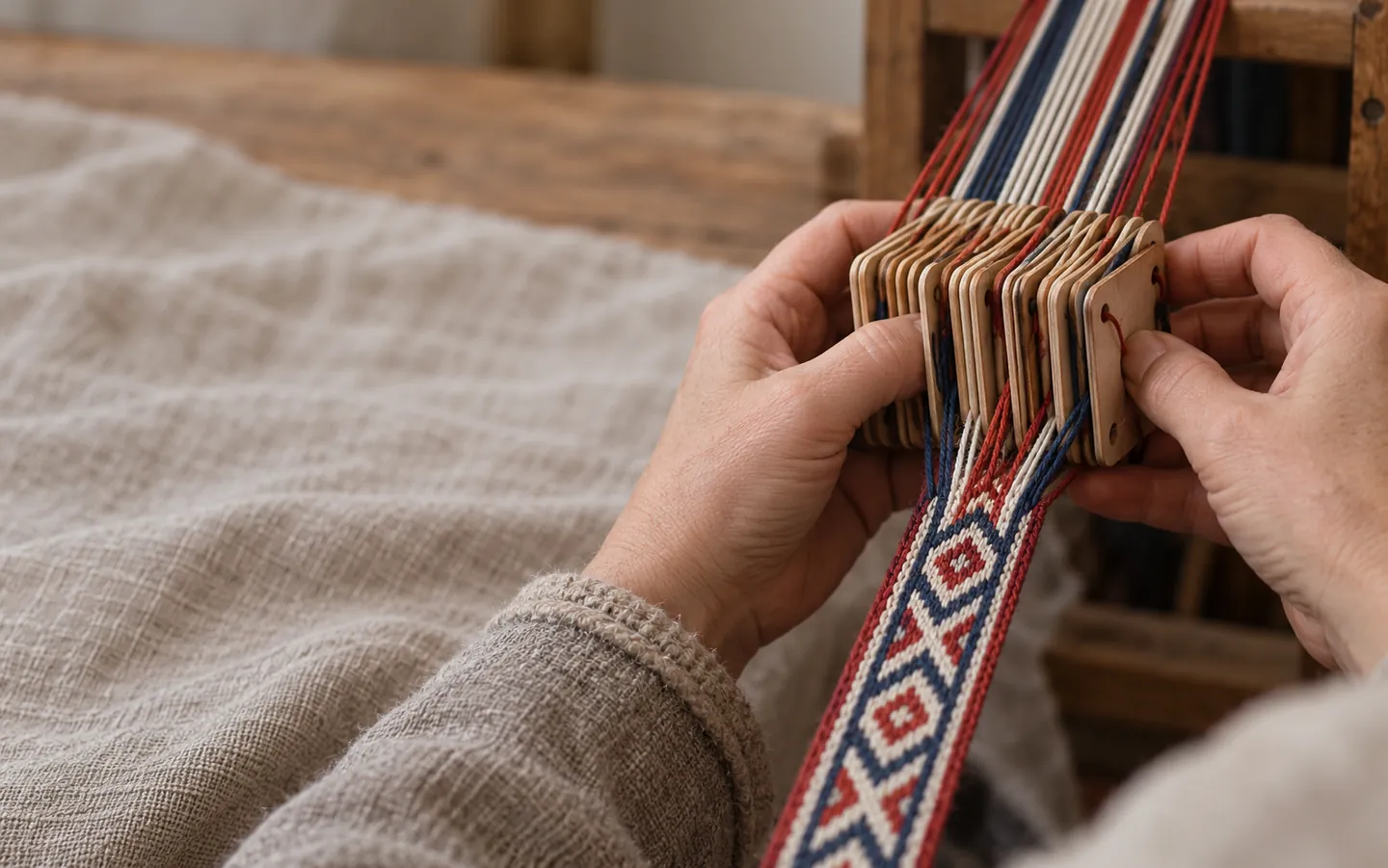
 dueltablet
AN ANCIENT WEAVING CRAFT
4 HOLES one thread through each corner
Not every tablet has a screen.
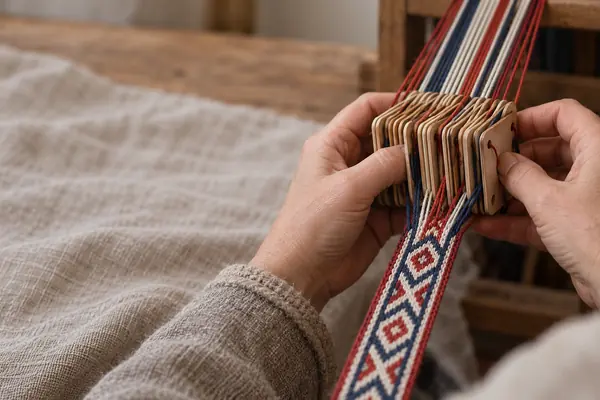
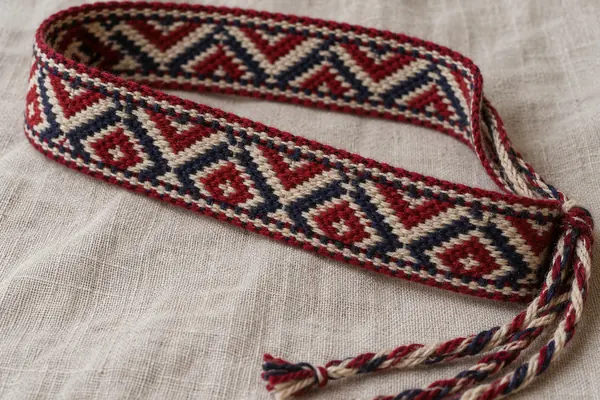
In tablet weaving, warp threads pass through holes in the corners of small square tablets. Turning the tablets twists the threads around the weft, building a strong, patterned band. Bands like this survive from Bronze Age salt mines and Viking graves.
Updated
Travel backTHE SHORT ANSWER
The tablets carry the warp threads.
Each turn twists them and moves the pattern on.
THE TABLETS
Tablets are small, thin and typically square, with a hole in each corner. Triangular, hexagonal and octagonal ones have also been found.
How it worksTHE PATTERN
Weavers rotate the tablets to twist the four threads together into a column. Changing the turning direction, such as four turns forward and four back, changes the pattern.
Travel backTHE FINDS
The Viking Age Oseberg grave in Norway held 48 tablet-woven bands. Older examples come from the Bronze Age salt mines at Hallstatt in Austria.
See the numbersA QUICK TRIP BACK
Pick an archaeological find. The bar shows how far back in time it reaches, from the Viking Age to the Bronze Age.
Dates from EXARC Journal experimental archaeology studies and Vest-Agder Museum. Ages are approximate and some come from the site rather than the band itself.
TWO NUMBERS WORTH KNOWING
One figure on the Oseberg find,
one on how many tablets a single band could take.
48
Tablet-woven bands identified in the grave
Researchers identified 48 tablet-woven bands among the Oseberg textiles and sorted them into five categories, from brocade to bands with three or more colours. About half are mounted in a tapestry weave.
OSEBERG · EXARC
41
Tablets used for one band about 3 cm wide
One Oseberg band, catalogued 13B2, was interpreted as woven with 29 pattern tablets and six in each edge, probably with two threads per tablet and double turns of 180°.
BAND 13B2 · EXARC
The Hallstatt salt mines have produced more than 420 textile complexes and over 800 individual textile finds, preserved by salt, constant low temperature and high humidity.
HOW A BAND IS WOVEN
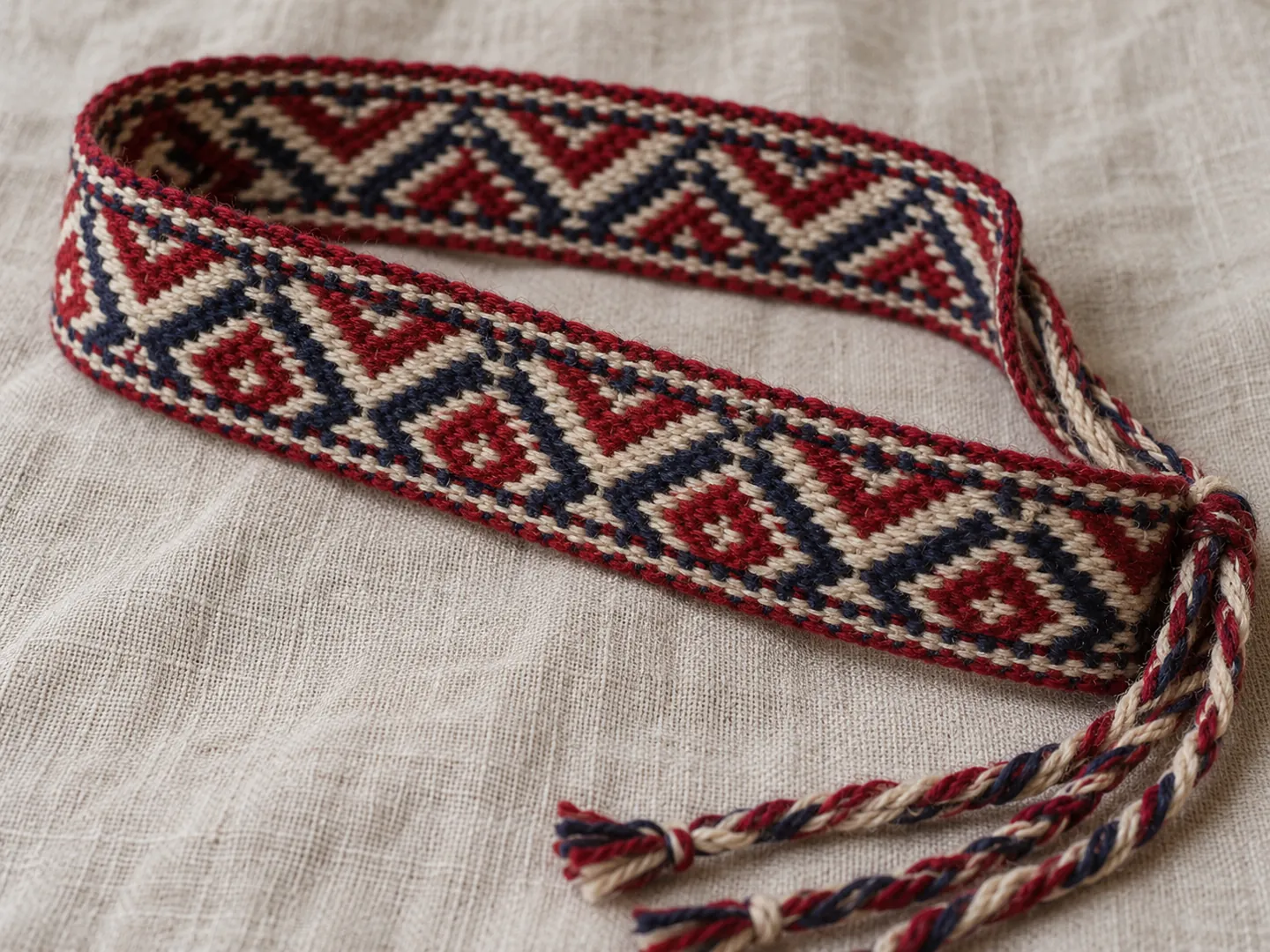
These steps follow an experimental reconstruction of Etruscan bands published in the EXARC Journal in 2024.
Tablet weaving usually needs two-ply thread, because the repeated twisting would weaken a single-ply one.
Pass a warp thread through each corner hole. Threading from left to right is called Z-threading; right to left is S-threading.
Rotate the tablets to twist the threads, then pass the weft through. A simple design turns four times forward, four back.
Remove the tablets. The long warp ends can be hemmed, braided or twisted.
WHERE IT WAS WOVEN
Tablet bands can be woven vertically on a warp-weighted loom, with weights holding the warp threads, or horizontally as a form of backstrap weaving.
Modern study and revival of tablet weaving have focused mostly on Northern European designs from the Iron Age to the medieval period, which can use dozens of tablets, dizzying patterns and even gold thread and silk.
Questions
It is a way of weaving narrow bands using small, thin tablets, typically square with a hole in each corner. Warp threads pass through the holes, and turning the tablets twists them and makes the pattern.
Yes, the tablets are sometimes called cards. They are small, thin objects, most often square, though triangular, hexagonal and octagonal ones have been found.
A textile from the Late Bronze Age part of the Hallstatt salt mines in Austria appears to include tablet weaving, and Etruscan finds date from the 8th and 7th centuries BC.
The tablets twist the warp threads again and again as they turn. An experimental study notes that tablet weaving typically requires two-ply threads for this reason.
They are 48 tablet-woven bands found in the Oseberg ship grave in Norway, dated 834 AD. They are among the textiles considered the most important from the Viking Age.
Sources
ABOUT THIS NAME
dueltablet.com is part of the DoodleSale portfolio. It isn't in an auction right now, but you can ask about leasing it.